
If it’s your first time in Naples in autumn, let a scent guide you: sweet, smoky, unmistakable.
It’s the aroma of chestnuts rising from the braziers, mingling with your morning coffee, and wafting through the alleys like a warm trail.
Here, the fruit of the Irpinia forests descends into the city and becomes an urban ritual: a steaming bag in your hands, the wind tingling your cheeks, the distinct sensation of being in the heart of the season.
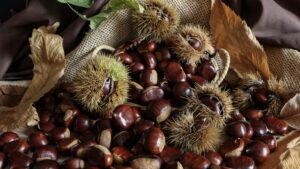
Chestnuts grow nearby, on the slopes of the Campanian Apennines. In Irpinia, chestnut groves shape hills with a cool, clean climate: it’s here that the famous Castagna di Montella PGI grows, small, firm, fragrant, with a sweetness that speaks of the undergrowth. The harvest begins between September and October: men and women walk through damp leaves, hand-picking the open husks, selecting the best fruit.
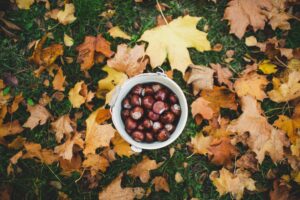
Then begins the slow, patient work: drying, sorting by size, and the first processing.
In some villages, the tradition of wood-fired drying kilns still persists, where low, constant heat dries the chestnuts for weeks, giving them that hearth-like aroma: this is the birth of the priest’s chestnuts. The journey continues toward Naples.
In the morning, the vans arrive at the local markets: stalls brimming with stalls, shiny shells, clean cuts on the backs ready for the embers. In the afternoon, when the light turns golden, street vendors appear with perforated pans and live braziers; the crisp sound of chestnuts popping, the rising steam, the salt stinging the fingers. It’s a scene that never tires: the city pauses for a moment, unwraps the bag, blows to avoid burning itself, and bites. Inside lies the forest, intact.
In the kitchen chestnuts speak many languages.
For savory dishes, they appear in peasant soups with cabbage, potatoes, or legumes; They become a puree to accompany roasts, they are dipped in pasta and beans to give roundness, they flavor warm salads with mushrooms and provola. For dessert, they are a smooth cream for filling tarts, an ingredient in castagnaccio (a cake flavored with rosemary), the ideal companion for dark chocolate or Campanian citrus fruits. And then there are the priest’s chestnuts: dark, smoked, concentrated; they are eaten plain, softened in wine, or become the protagonists of festive desserts. Each recipe preserves an ancient gesture—cutting, scoring, peeling—that harmonizes memory and flavor.
Autumn in Campania
is also a calendar of festivals and street fairs: decorated towns, music, rooms smelling of wood, long communal tables. In the cities, tradition meets the urban rhythm: wine bars pair roasted chestnuts with new wine, pastry shops play with mousses and autumn glazes, restaurants dedicate themed menus to “things of the woods.” Walking in Naples during this time of year is an invitation to slow down: take Spaccanapoli, let the scent call you, head down to Piazza del Gesù, walk along Via Toledo, and reach Lungomare Caracciolo with a still-warm bag. You’ll realize that chestnuts here are more than a snack: they’re a way of being together. If you want to take home an experience, find a real market (Pignasecca or Porta Nolana), buy fresh chestnuts, and try cooking them: cut them, soak them in warm water for ten minutes, drain them, in a perforated pan or a hot oven, with a pinch of salt at the end. The secret is not to rush: chestnuts, like autumn, require time. At the end of the day, a scent will remain in your hands and a simple sensation: warmth.
That of a tradition that begins in the woods and reaches the alleys, combining the patience of the harvest with the quick gesture of a bite on the street, reminiscent of childhood, family, and a vibrant city. It’s the Campanian way of saying that autumn has truly arrived.